


Code Enforcement Is a Risk-Management Issue
Code enforcement issues can quickly become more than a simple repair matter, affecting construction, operations, financing, sales, and licensing. A strong response requires addressing both the physical condition and the legal process—understanding the allegations, meeting deadlines, preserving evidence, and developing a coordinated strategy for resolution.
The Property Was Used This Way Before. Does That Mean You Can Continue?
A property’s history of use does not automatically establish the legal right to continue that use. Before buying, leasing, renovating, or reopening a property, owners and operators should verify prior approvals, occupancy records, zoning status, and any nonconforming-use rights to avoid costly delays or enforcement issues.
Legal Strategy Should Begin Before the Problem
Early legal involvement can prevent costly delays, permit issues, and unexpected project obstacles. By identifying zoning requirements, necessary approvals, and potential risks before major commitments are made, property owners and developers can create a clearer path from concept to lawful operation.
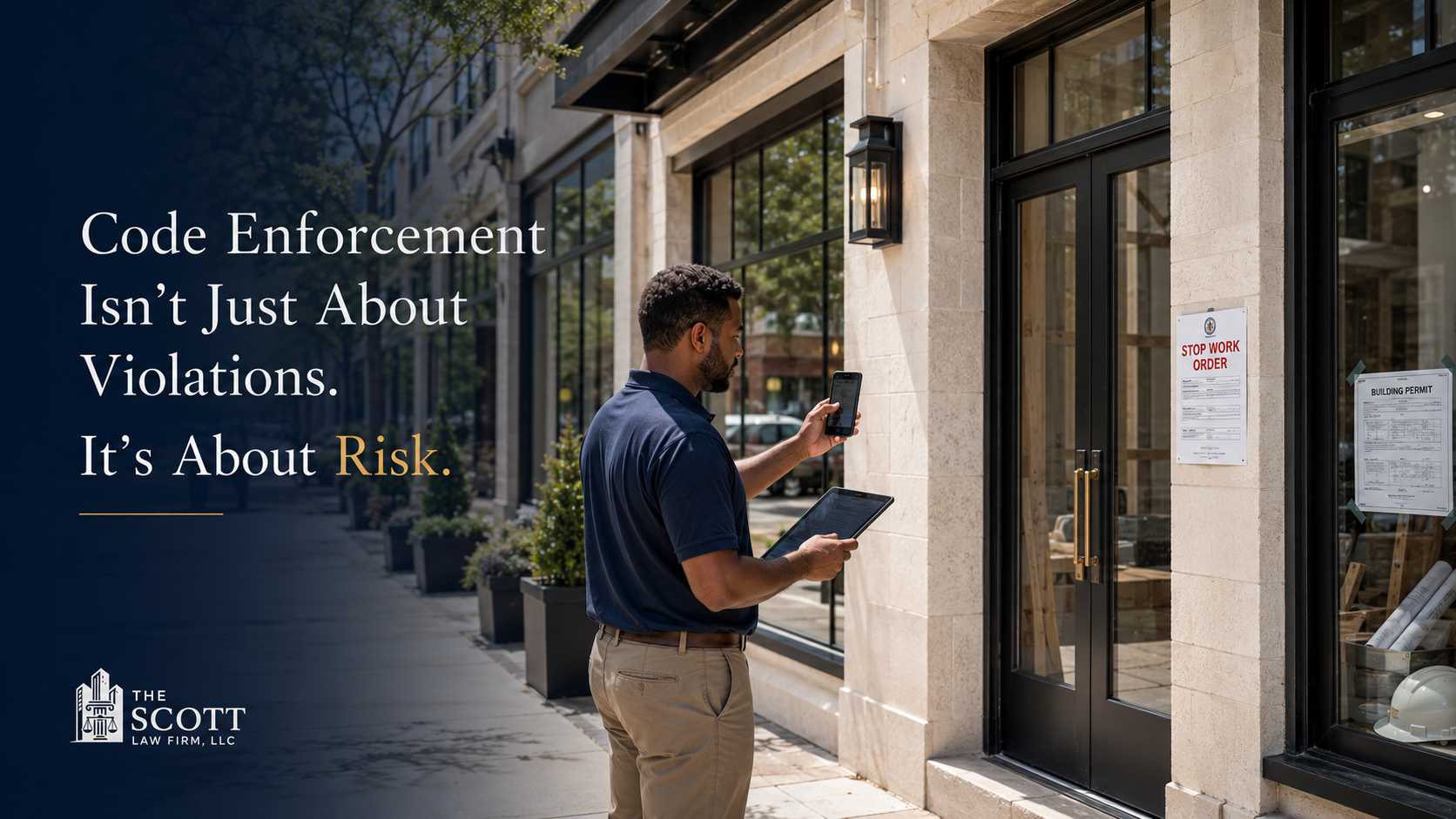
Code Enforcement Isn't Just About Violations. It's About Risk.
Code enforcement issues can create costly delays for property owners and businesses. Understanding zoning, permitting, licensing, and compliance requirements before problems arise can help protect your investment and keep your project moving forward.

Before You Build, Buy, or Expand: Five Legal Issues to Address First
Before buying, building, renovating, or expanding in Metro Atlanta, property and business owners should evaluate zoning, code compliance, permitting, licensing, and other local requirements. Addressing these legal issues early can help prevent stop-work orders, costly delays, fines, and unexpected barriers to development.

The Code Enforcement Letter You Never Wanted to Receive
A code enforcement letter is more than an administrative notice. It is often the first step in a legal process that can lead to hearings, fines, liens, or restrictions on the use of your property. Before you assume the issue is minor or rush to make changes, it is important to understand what the notice actually means and the options available to protect your interests. This article explains what property owners should know after receiving a code enforcement notice and how a strategic response can often make all the difference.
When Development Hits a Roadblock:
Development projects rarely fail because of a single issue. More often, they stall because of permitting delays, zoning conflicts, code enforcement actions, or unexpected regulatory requirements. In this edition, we examine the most common roadblocks that can disrupt a project and discuss practical strategies property owners, developers, and business owners can use to keep projects moving while minimizing costly delays.
Code Enforcement Risks Business and Property Owners Should Not Ignore
Many property owners and business operators underestimate how quickly a code enforcement issue can escalate. What begins as a routine notice or inspection can lead to fines, court appearances, stop work orders, permit delays, business license complications, or operational disruption. In this featured article, we discuss some of the most common code enforcement risks affecting businesses, commercial properties, investors, and developers throughout Metro Atlanta and why addressing these issues early can make a significant difference.
Georgia Zoning Hearing Risks Municipalities Should Watch This Summer
As development pressure continues across Georgia, zoning disputes are increasingly centered on whether local governments followed a legally defensible process. This article examines the procedural mistakes, hearing vulnerabilities, and record-building issues that often drive rezoning and land use litigation across metro Atlanta and surrounding growth corridors.
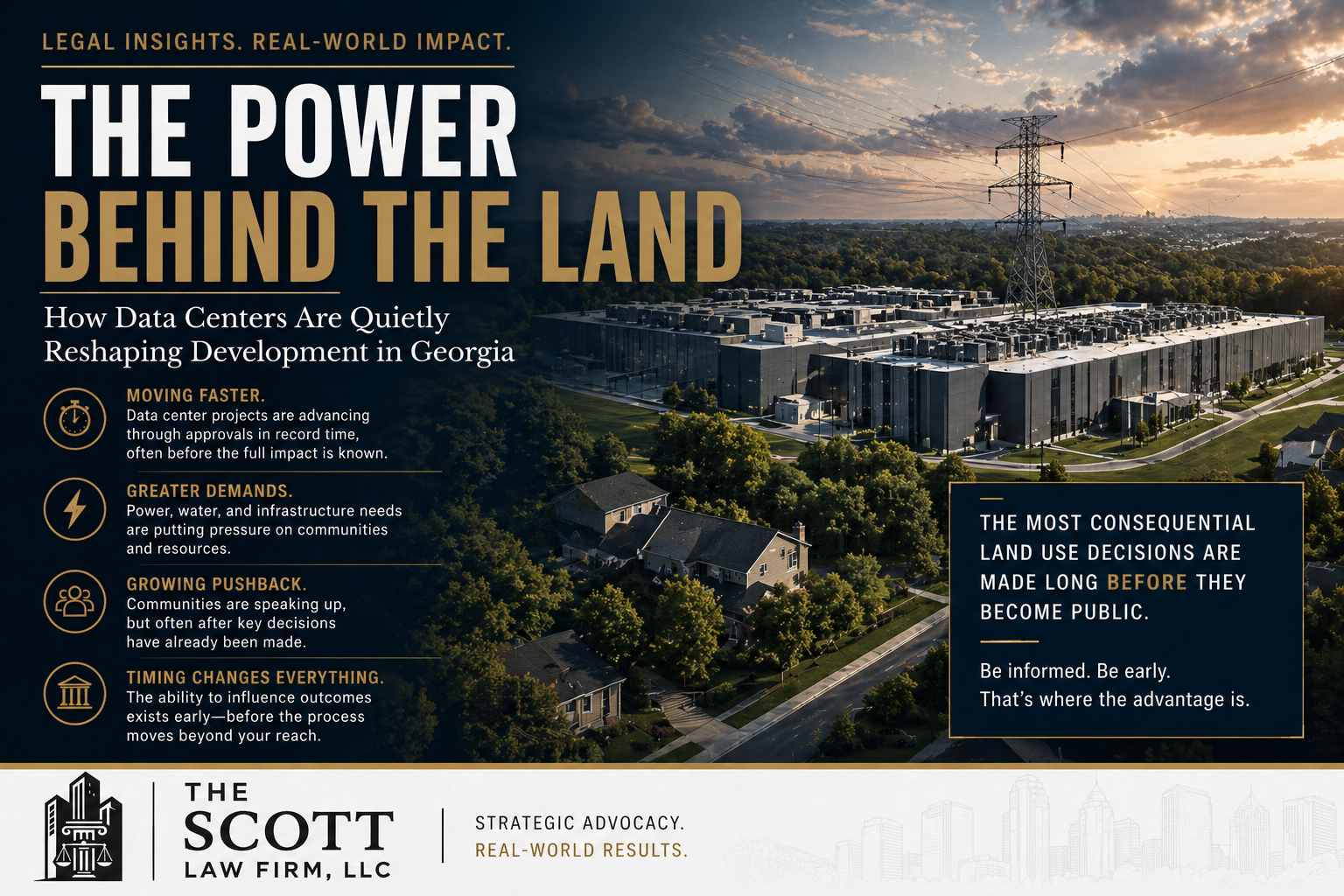
The Power Behind the Land How Data Centers Are Quietly Reshaping Development in Georgia
Data centers are quietly driving a new wave of development across Georgia, advancing through zoning and approval processes at a pace that often leaves property and business owners reacting after key decisions are already made. This piece highlights where the real leverage exists and why engaging early is critical before the outcome is effectively set.
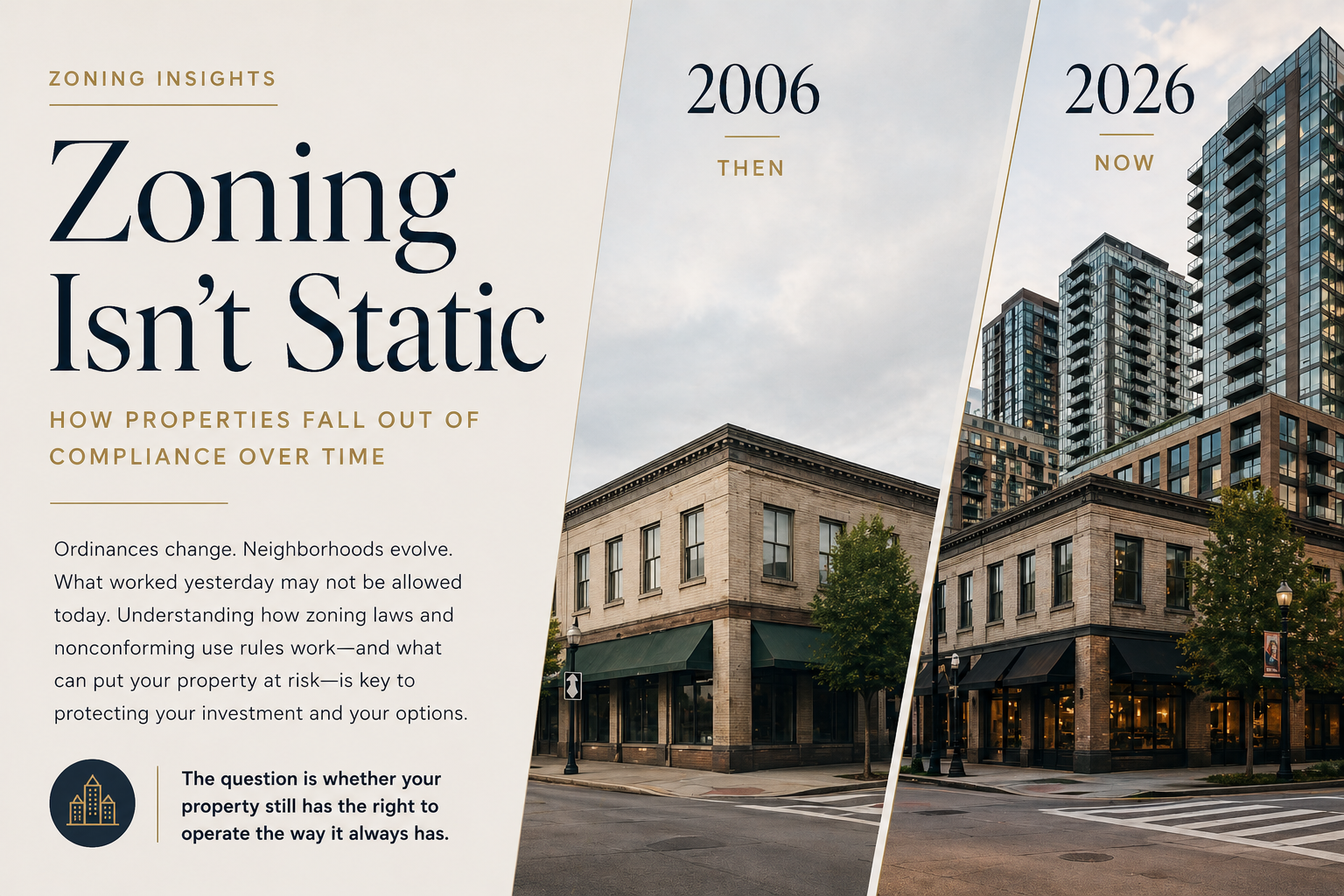
Zoning Isn’t Static: How Properties Fall Out of Compliance Over Time
What worked yesterday may not be allowed today. The question is whether your property still has the right to operate the way it always has.
When Code Enforcement Meets an Estate: Who Is Actually Responsible?
When a property owner passes, code enforcement does not wait. Understanding who has authority, who may be cited, and how to respond can make the difference between a manageable issue and a growing legal problem.
Construction Halted: Understanding Stop-Work Orders Across Metro Atlanta
Stop-work orders are a powerful enforcement tool used by Metro Atlanta jurisdictions to immediately halt construction when work proceeds without permits, deviates from approved plans, or violates zoning or building codes. Once issued, all activity must cease until the issue is corrected and compliance is confirmed. These orders can disrupt project timelines and increase costs, making it critical for property owners to quickly assess the violation and take corrective action to resume work.

The Data Center Boom: How Digital Infrastructure Is Reshaping Metro Atlanta
Metro Atlanta is quickly emerging as a major data center hub, driven by rising demand for cloud computing and digital infrastructure. This growth is reshaping land use, energy planning, and zoning policy, as large-scale facilities expand across the region and prompt new regulatory considerations.

When the World Comes to Atlanta: Zoning and Enforcement During the World Cup
Major global events bring tremendous opportunity for Atlanta businesses, but they also bring increased inspections, permitting requirements, and zoning enforcement.
That Citation Isn’t Always Just a Ticket: When Code Enforcement Turns Civil or Criminal
A code enforcement citation can feel like a criminal charge, but many begin as civil regulatory matters focused on achieving compliance, not punishment. The classification matters because strategy shifts depending on whether the court is seeking correction or evaluating culpability. Most violations stem from placement, use, or approval history rather than unsafe construction, and they often surface during re-inspections, ownership changes, or neighbor complaints. Deadlines trigger compliance windows, and early engagement can open the door to documentation, variances, or administrative relief before fines escalate or exposure increases. Addressed strategically, most code issues are manageable; ignored, they can quickly evolve into significant financial and legal risk.
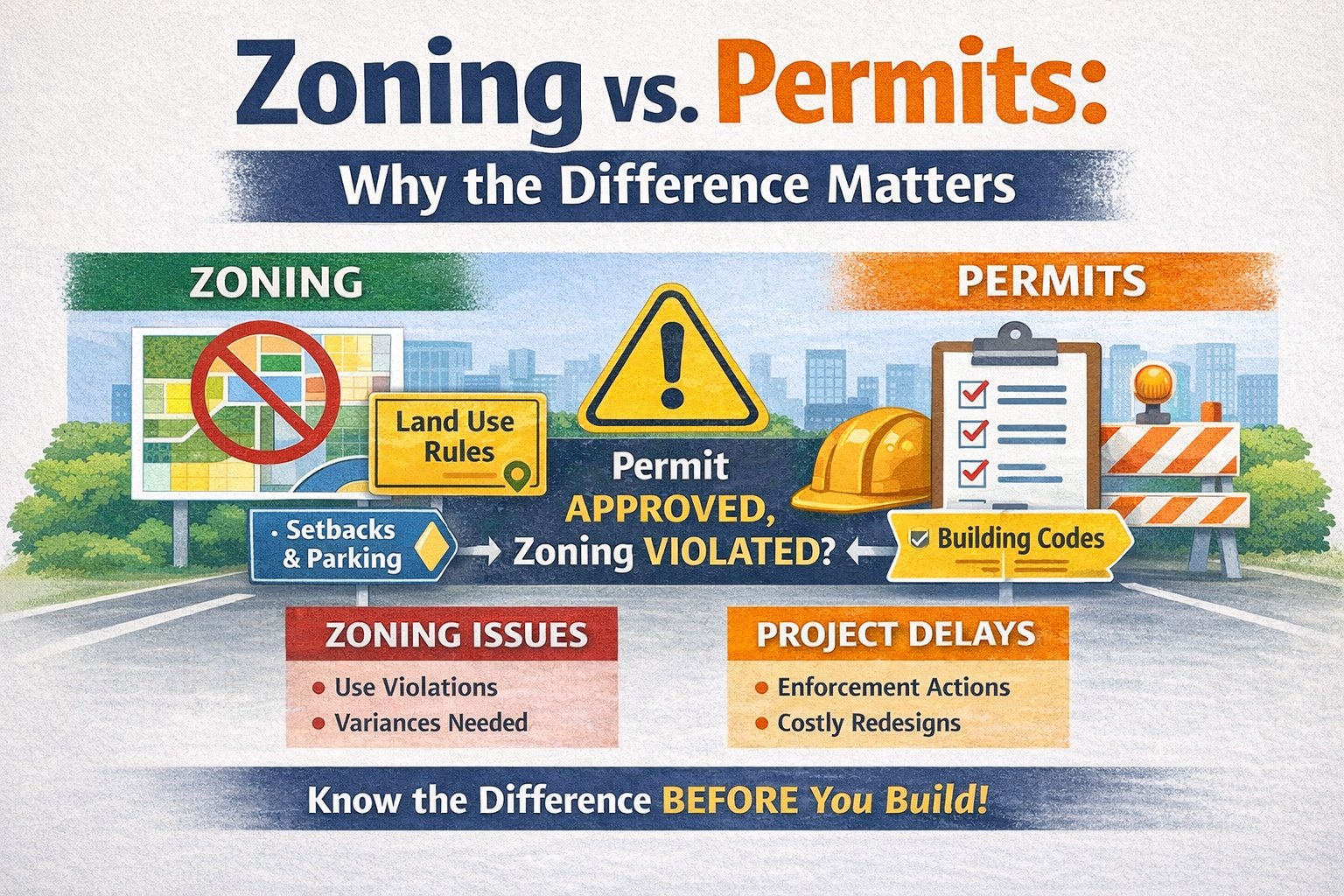
Zoning vs. Permits: Why the Difference Matters
A building permit does not equal full approval. Zoning and permitting are separate regulatory layers, reviewed by different departments applying different standards. A project can pass structural and life safety review yet still violate setbacks, height limits, parking ratios, or permitted use classifications. When enforcement arises, the issue is often not faulty construction but unlawful land use, requiring variances, administrative relief, or redesign rather than repairs. Understanding this distinction early protects timelines, budgets, and the underlying investment, because a permitted project is not necessarily a lawful one unless zoning compliance is secured as well.
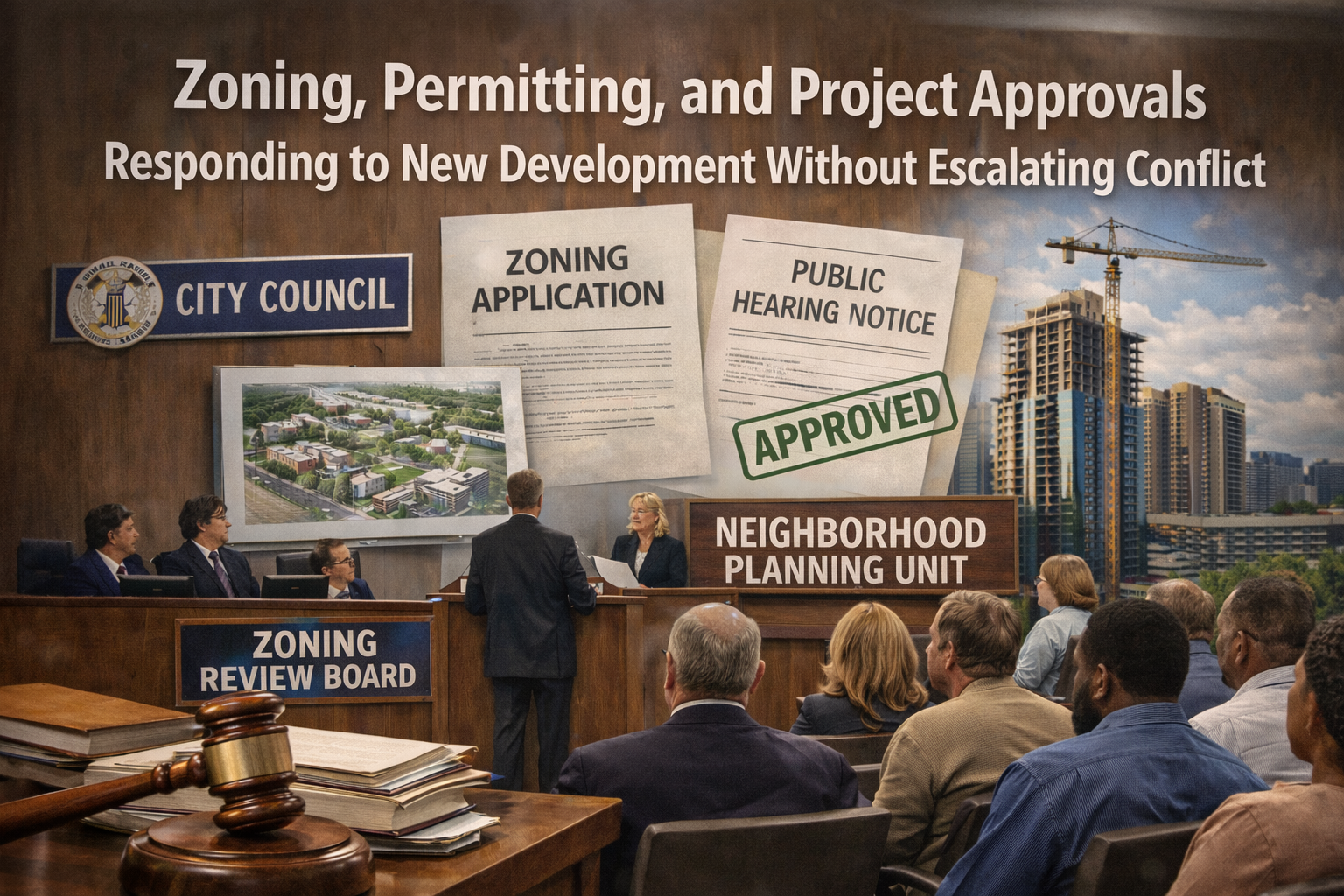
Zoning, Permitting, and Project Approvals Responding to New Development Without Escalating Conflict
In Atlanta’s fast-moving development environment, influence comes from strategy, not reaction. Real impact happens within the City’s formal zoning and permitting channels, where decisions are guided by ordinance standards and planning criteria. Stakeholders who ground their engagement in legally relevant issues such as traffic, infrastructure, and land use compatibility carry weight and build credibility. Strategic participation within these processes allows concerns to be heard, preserves leverage, and shapes outcomes without escalating conflict.
When Love Ends but the Property Remains
Divorce does not pause property risk. For high-net-worth individuals and real estate owners, the months between separation and final decree can quietly expose valuable assets to loss, leverage, or legal scrutiny. Ownership may remain shared, obligations continue, and everyday decisions can later carry outsized consequences. Without strategic planning, this interim period becomes a vulnerability. Treated correctly, it becomes an opportunity to preserve value, protect position, and ensure the final outcome reflects intention rather than repair.

When Business Relationships Are Put to the Test
Every business relationship begins with optimism. Disputes rarely arise at formation. They surface later, when expectations diverge, roles evolve, or one party wants out before the other is ready. By the time conflict becomes visible, the damage is often already underway. The difference between a manageable transition and a costly dispute is rarely the relationship itself, but whether the legal structure anticipated the moment when alignment would end.